Africapitalism and Tony Elumelu’s Vision at the Vanguard of Africa’s New Energy Economy
While some business leaders are known for building thriving enterprises, others leave their mark by influencing economic thought. Tony Elumelu, CFR, has achieved both over the past decade. Through...

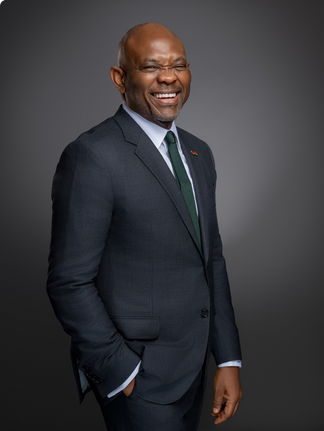
While some business leaders are known for building thriving enterprises, others leave their mark by influencing economic thought. Tony Elumelu, CFR, has achieved both over the past decade. Through his advocacy of Africapitalism; the belief that Africa’s private sector should be a catalyst for economic transformation, employment generation, and inclusive prosperity rather than merely pursuing short-term gains, he has helped reshape conversations around Africa’s development model.
Central to this philosophy is a simple principle which implies that African resources and investments should be directed toward solving Africa’s own challenges.
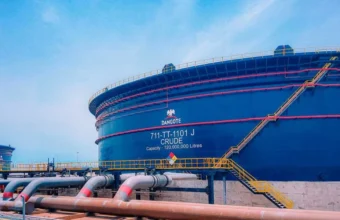
Though, the billionaire philanthropy; Elumelu’s appointment as Chairman of Seplat Energy Plc, effective January 1, 2027, represents much more than a change in corporate leadership. With Heirs Holdings holding a substantial 20.07 percent stake in the company, the move symbolizes the alignment of a powerful economic vision with one of Africa’s most strategic industries. It also comes amid a major transformation in the West African energy sector, where international oil companies are steadily scaling back onshore operations, creating opportunities for indigenous firms to assume greater control.
Historically, Africa’s resource sector has been dominated by a model in which foreign investors extracted raw materials and repatriated much of the resulting wealth. Seplat Energy, with listings in both Lagos and London, has emerged as one of the companies helping to redefine that narrative.
The path to Elumelu’s chairmanship was further strengthened by Heirs Energies’ acquisition of the entire stake held by French energy company Maurel & Prom in Seplat for $496 million. The deal received strong backing from key African financial institutions, including Afreximbank and the Africa Finance Corporation (AFC), underscoring growing confidence in indigenous ownership and investment.
This transition reflects a broader shift within Nigeria’s energy industry. Regulatory data indicates that local operators now account for roughly 50 to 60 percent of the country’s oil production. Through its increased investment and leadership role in Seplat, Heirs Holdings is pursuing more than shareholder value; it is reinforcing a vision of African-led economic growth and industrial development.
As a result, leading one of Nigeria’s most significant energy companies is no longer solely about output figures or financial performance. It is also about proving that African ownership, prudent capital management, and long-term institution-building can combine to create sustainable wealth and lasting economic progress for the continent.
Under the outgoing leadership of Chairman Senator Udoma Udo Udoma and CEO Roger Brown, Seplat aggressively expanded its footprint, culminating in the historic $1.28 billion acquisition of ExxonMobil’s Nigerian shallow-water assets.
Now, alongside incoming CEO Effiong Okon; the veteran executive who successfully steered the flagship ANOH Gas Processing project to its first gas delivery, Elumelu inherits a powerful corporate engine.
In a sector highly exposed to geopolitical uncertainty and increasing environmental scrutiny, the “Elumelu Approach” will be tested across several strategic fronts. One is the Gas Transition Agenda, where Africapitalism positions infrastructure as a catalyst for social and economic progress. Under Seplat’s 2030 Strategic Roadmap, the board’s priorities are expected to center on expanding natural gas development as a means of tackling energy poverty and strengthening domestic energy access.
Another key area is Community Partnership and Inclusion. Beyond traditional Corporate Social Responsibility (CSR) programmes, the philosophy advocates for host communities in the Niger Delta to become direct participants in economic value creation, helping to reduce the underlying causes of vandalism, insecurity, and social unrest.
Equally important is Global Market Competitiveness. Seplat must continue proving to international investors and financial markets that a locally led, purpose-driven company can consistently deliver world-class operational performance, robust corporate governance, and transparency on par with global industry standards.
Reflecting on this vision after his election, Tony Elumelu stated: “I firmly believe in the critical role indigenous resources play in the economic transformation of Nigeria and Africa,” reinforcing the expectation that Seplat’s governance framework should embody the broader developmental aspirations of the continent.
The Tony Elumelu’s strategy has never been siloed. The Seplat chairmanship integrates neatly into an expansive, cross-sector industrial network. Through Heirs Holdings and Transcorp Group, Elumelu already controls vital nodes of the continent’s economic architecture, these leading corporate entities play critical roles in driving economic growth and development across Africa.
Seplat Energy, operating in the upstream oil and gas sector, contributes significantly to energy security by supplying resources that power industries and support regional infrastructure development. In the power generation sector, Transcorp Power helps sustain economic activities by providing electricity that keeps schools, hospitals, businesses, and manufacturing hubs operational.
Meanwhile, United Bank for Africa (UBA) serves as a major pan-African financial institution, facilitating cross-border trade and investment across more than 20 African countries. Through financing, banking services, and economic partnerships, UBA supports commerce and strengthens regional economic integration. Together, these organizations are advancing industrialization, improving infrastructure, and fostering sustainable economic development across the continent.
By linking the extraction of gas directly to Transcorp’s power plants, and leveraging UBA’s financial rails, the underlying goal of Africapitalism becomes legible: building a self-sustaining, closed-loop African value chain.
When the gavel falls at his first official board meeting, the theoretical arguments of economic papers will meet the hard realities of energy transition, carbon emission targets, and volatile global commodity prices.
If Elumelu succeeds, the Seplat boardroom will serve as the definitive blueprint for a new era; one where African corporations don’t just generate substantial wealth for far-flung shareholders, but reliably build the foundation for an entire continent’s future.