Gold over school: How poverty keeps Niger children in mining pits
For 15-year-old Musa, gold mining started when he was barely 10. Five years later, the teenager is no longer in school and spends his days looking for gold around Minna, a decision he says was forced...

For 15-year-old Musa, gold mining started when he was barely 10.
Table Of Content
Five years later, the teenager is no longer in school and spends his days looking for gold around Minna, a decision he says was forced on him by poverty and the need to support his family.
“I want to go back to school, but there is no money to send me,” Musa told DAILY POST during an interview on Wednesday, September 16, a day before the death of suspected illegal miners in the custody of the Nigeria Security and Civil Defence Corps, NSCDC, in Minna.
Musa is one of several young people whose stories show why the battle against illegal mining cannot be reduced to arrests and raids.
Behind the pits are children who have left classrooms, young men searching for daily income and families that see gold mining as one of the few activities capable of putting food on the table.
The deaths of 37 suspected illegal miners in NSCDC custody have now brought the issue into global focus, raising questions not only about what happened inside the detention facility but about why people, including children, continue to enter mining communities despite repeated enforcement operations.
When gold replaces school
In the Kuta area of Shiroro Local Government Area, the effect of mining on education is becoming a concern in some communities.
A school principal, who spoke to DAILY POST, said many schools in parts of Shiroro had become largely empty because children had moved into mining, with some preferring the immediate income from mining to remaining in school.
Some parents interviewed questioned the value of keeping their children in school when they were struggling to provide for their families and there was no guarantee of employment after graduation.
For some of them, mining offered a way to meet immediate needs, pay school fees for some children and keep food on the table.
The result is a difficult choice between an uncertain future through education and immediate income from the mining pit.
Kudu, an 18-year-old boy from the Chanchaga area of Minna, said gold mining had become a family affair, with his mother and siblings participating in the activity.
He said the proceeds help some families meet household needs and pay school fees, although not every child in the family remains in school.
Some miners told DAILY POST they could make as much as N20,000 on a good day, although earnings could be much lower or nothing at all on other days.
For 22-year-old Muhammad, the danger associated with mining is not enough to make him stop, as he stated that he had been mining for about four years and regarded the work as a means of earning a daily living.
He said death could happen anywhere and that he would return to mining after being released because he had no other source of income.
Fourteen-year-old Hassan, whose parents moved from Kano to Minna over two years ago, stated that he had not returned to school since arriving in the state and had spent about two years mining.
Another young miner told DAILY POST he finished secondary school about four years ago but could not continue his education because of a lack of money.
He explained that he took up mining to raise money to return to school while also helping his parents cater for his five younger siblings.
The stories are different, but the underlying problem is similar: immediate survival is competing with long-term education.
Mining moves into neighbourhoods
The expansion of mining has also brought the activity closer to homes and other community spaces.
Residents around M.I. Wushishi and neighbouring communities told DAILY POST that mining had damaged fences and affected properties, while some alleged that miners threatened residents who challenged their activities or attempted to stop them from digging around homes.
One resident, Peter Auta, alleged that miners attacked him after he confronted them and that more than 500 blocks belonging to his fence were destroyed.
According to him, he reported the matter to security agencies, but the mining activity continued.
The concerns have also been linked to repeated arrests and releases.
Niger State Police Command spokesman, Wasiu Abiodun had previously described the repeated arrest and return of illegal miners to mining sites as “recycling them”.
The NSCDC has also said it arrested more than 100 suspected illegal miners in Niger State this year, with some charged to court and some minors granted bail.
Arrested, released and back in the pits
The latest operation began on September 15 and continued into September 16 around the M.I. Wushishi/Lukoto Village mining axis.
The NSCDC described it as a “burst operation” and said scores of suspected illegal miners were arrested while various exhibits were recovered.
DAILY POST visited the area on September 16 and spoke directly with some of the miners after they had been driven away from the mining site by the NSCDC operation.
Several miners said they had been arrested during previous operations but later returned to mining because they had no alternative source of income.
Some also alleged that when they were arrested, they were asked for as much as N500,000 for bail, although they said negotiations could bring the amount down to between N15,000 and N25,000.
Two parents separately told DAILY POST that they paid N500,000 in efforts to secure the release of their children after they were arrested, but lamented that their children were not released despite the payments.
DAILY POST could not independently establish who received the money, the legal basis for the payments or whether the money was an authorised bail charge.
The NSCDC was contacted for clarification but had not responded before the report was filed.
The issue also featured in Governor Mohammed Umaru Bago’s account of the incident.
The governor questioned why parents who allegedly paid the N500,000 did not bring the matter to the media or government earlier, saying an earlier report could have alerted the authorities and created an opportunity for intervention.
The September operation, therefore, came against a background of repeated enforcement, arrests and the return of miners to the same communities.
For many of the young people interviewed, the prospect of being arrested was not enough to end their dependence on mining because, once released, they still had to find a way to feed themselves and their families.
The morning 37 died
The situation changed dramatically on Thursday, September 17, when the NSCDC announced that some of the suspected illegal miners detained after the operation had died.
The Corps initially linked the deaths to a suspected outbreak of disease but stressed that the actual cause had not been conclusively established.
The Niger State Government subsequently put the death toll at 37 and ordered investigations into the circumstances surrounding the incident.
A survivor, Dauda Shehu, stated that 65 detainees had been packed into a poorly ventilated cell.
He said the detainees struggled for fresh air while some banged on the door.
Another survivor told DAILY POST that only four people survived from those held in the cell.
He alleged that the heat became unbearable, adding that detainees asked officers to open the door but were refused, and that some drank their own urine because of dehydration.
The survivor also alleged that detainees continued banging on the door after some people began collapsing.
The allegations are among the issues expected to be examined by investigators.
The NSCDC Commandant-General has since ordered an investigation into the deaths, including the condition of the detainees when they were arrested, the duration and environment of their detention, the medical attention available to them and other circumstances surrounding the incident.
The bodies were transferred to General Hospital, Minna, for clinical examination and laboratory tests.
The Medical Director of the hospital, Dr Mohammed Danasabe, said the hospital registered 37 bodies deposited by the NSCDC and recorded the same 37 bodies as having been transported out for burial.
Families search for their dead
As news of the deaths spread, families gathered in search of relatives who had been arrested during the mining operation.
A video circulating after the incident showed grieving relatives calling the names of their children and attempting to identify the bodies.
Some relatives pointed to what they described as injuries or burns.
The bodies were later distributed to communities from which the deceased were believed to have come, including Sabon-Titi, Maitumbi, Tunga, Chanchaga and Bosso, among others.
At the Islamic burial ground in Tunga, one of those involved in conducting the burial rites, Malam Musa, said the rites were carried out from about 8 p.m. until 11 p.m. on Thursday and continued on Friday.
Another eyewitness claimed that more than 60 people had died and alleged that some bodies had turned black because of a lack of oxygen.
That claim could not be independently verified and differs from the official figure of 37 deaths released by the Niger State Government.
The conflicting accounts have added to calls for forensic examination and a transparent investigation into exactly what happened inside the detention facility.
Fear spreads across Minna
The deaths triggered protests that spread beyond the mining communities into parts of Minna. The protest began around Thursday night, with youths moving from areas around Alovera Hotel, Top Medical and M.I. Wushishi Junction through El-Amin University towards Maitumbi.
Residents said shops were abandoned as the protesters moved through the area, while some alleged that protesters carried cutlasses and other dangerous weapons and threatened people who tried to stop them.
By Friday morning, tension remained high.
Residents leaving their homes for work and business were caught in the unrest, and some hurried back as markets and shops were forced to close.
Movement around some parts of Minna later showed that markets had been closed, with economic activities largely grounded as angry miners carried out coordinated protests across parts of the city.
A resident of M.I. Wushishi, Mrs Habiba, told DAILY POST that they did not sleep throughout the night because of fears that the violence could spread into residential areas.
Several gunshots were also heard in parts of Minna, particularly around Tunga, although Daily Post could not independently establish the source of the shots.
The unrest also resulted in attacks on public property.
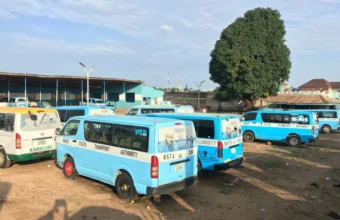
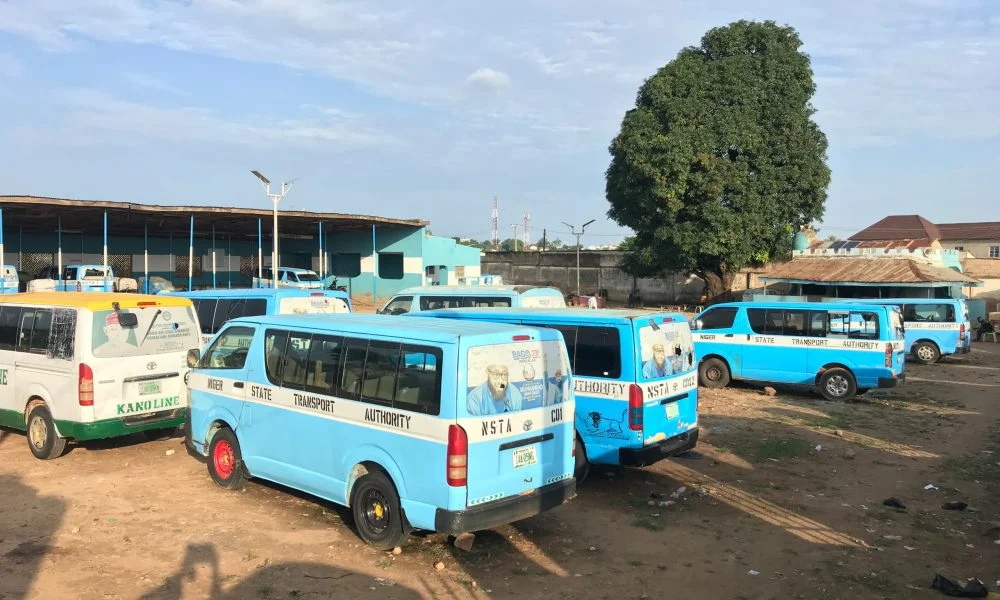
DAILY POST correspondent visited the Niger State Transport Authority (NSTA) facility and saw more than 10 vehicles with their windows and windscreens destroyed.
There were also allegations that a vehicle belonging to the coordinator of Islamic Schools to the Niger State Governor was destroyed at BY Supermarket in Tunga, while the official was allegedly beaten and his phones stolen.
The violence eventually prompted the state government to impose a six-hour curfew on Minna from after Friday prayers, with the governor directing businesses in the state capital to shut down.
IGP vows full investigation
The Inspector-General of Police, IGP Rilwan Disu, visited Governor Mohammed Umaru Bago in Minna on Friday over the deaths and pledged that the police would leave no stone unturned in determining what led to the incident.
Disu described the deaths as tragic and said deaths in custody were a serious matter within the purview of the police, particularly because 37 people had died.
He assured the governor that the police would cooperate with the state government and the NSCDC in the investigation.
The IGP also appealed to residents to remain calm and warned against taking the law into their own hands following attacks on public and private property. He said police patrols would be intensified across Minna and other towns to prevent a breakdown of law and order.
Bago said preliminary investigations were examining possibilities including overcrowding, suffocation and exposure to substances associated with mining. He stressed that these were preliminary observations and not the final cause of death.
The governor also disclosed that samples from the mining site would be examined while forensic and autopsy processes continued.
He said all mining activities around the affected M.I. Wushishi site had been suspended and that the government had invited experts from Abuja to examine the area.
Government opens investigations
The Niger State Government has established a committee of inquiry headed by Deputy Governor Yakubu Garba to determine the root cause of the deaths.
The committee is expected to work alongside investigations by the police, DSS and NSCDC, while forensic examinations and autopsies are expected to establish the medical cause of death.
The NSCDC Niger State Commandant, Suberu Siyaka Aniviye, and members of his team were suspended by the Corps’ Commandant-General to allow for a proper investigation into the incident, even as the State Police Command has also commenced its own investigation.
The Niger State House of Assembly called for a thorough, impartial and transparent investigation, saying investigators should examine the condition of the detainees at the time of arrest, the number detained, the duration of detention, the detention environment, medical attention and the definitive cause of death.
The Assembly said enforcement against illegal mining was legitimate but must respect human life, dignity and fundamental rights.
Former military Head of State, General Ibrahim Badamasi Babangida (retd.), condemned the deaths and expressed sympathy with the families, affected communities and the government and people of Niger State.
In a statement issued on his behalf by Dr Danladi Umar Abdulhameed, Babangida described the incident as deeply distressing and prayed for strength for the bereaved families.
He called for calm among youths and relatives of the victims and urged them to allow the ongoing investigations to proceed without interference.
Babangida said a transparent inquiry was necessary to establish what happened and provide clear answers to the families of those who died.
The investigations now involve several institutions, while the government has begun efforts to identify the families of the deceased and provide support to them.
The immediate response has also included the suspension of mining activities in the state pending further investigation, increased security presence and measures to contain the unrest in Minna.
The question beyond Niger
What is happening in Niger State raises a national question about the limits of enforcement when poverty continues to push people towards illegal economic activities.
Musa wants to return to school but says his family cannot afford it.
Muhammad says he will return to mining because he has no other work, while a school principal in Shiroro says mining is drawing children away from the classroom.
For the government, the challenge is, therefore, not only how to stop illegal mining but what happens to the children and families whose survival has become tied to it.
Arrests can remove miners from a site for days, weeks or even longer.
But unless the economic circumstances that keep sending them back are addressed, the cycle of arrest, release and return may continue.
The deaths of 37 suspected illegal miners in custody have added another question to the crisis: when people are arrested in the course of enforcing the law, who is responsible for their safety while they remain in custody?
The answer will depend on the outcome of the investigations now underway.