Agents urge more CNG stations for green tax policy
The President of the Association of Nigerian Licensed Customs Agents (ANLCA), Mr. Emenike Nwokeoji, has warned that the Federal Government’s green tax policy may fail to achieve its objectives unless...

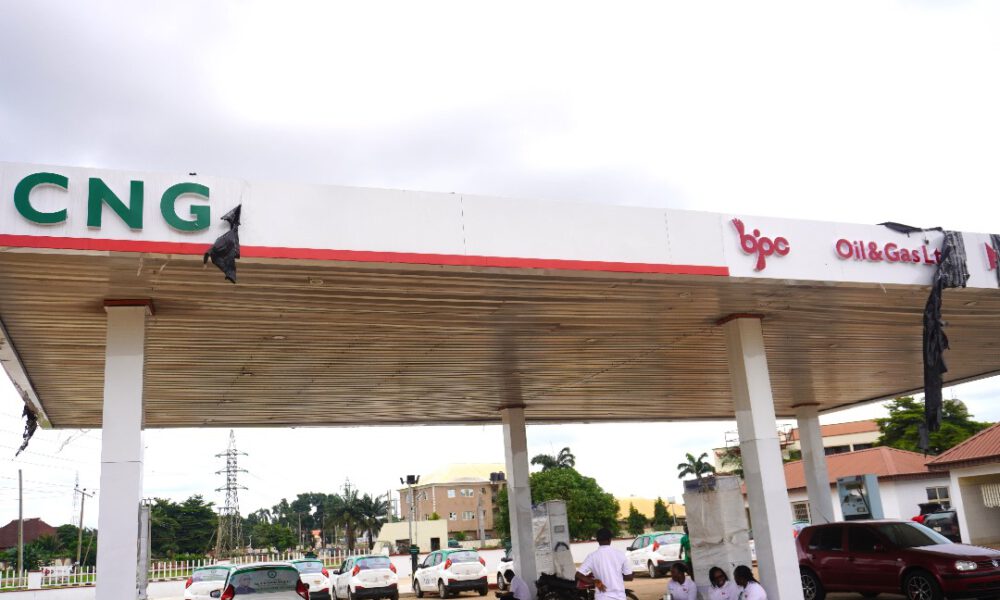
The President of the Association of Nigerian Licensed Customs Agents (ANLCA), Mr. Emenike Nwokeoji, has warned that the Federal Government’s green tax policy may fail to achieve its objectives unless adequate Compressed Natural Gas (CNG) and Electric Vehicle (EV) infrastructure is provided across the country.
Nwokeoji, who spoke as the Nigeria Customs Service (NCS) commenced implementation of the new fiscal policy, said the government should prioritise the establishment of CNG conversion centres and EV charging stations before encouraging Nigerians to embrace alternative-fuel vehicles.
He, however, commended the Federal Government for reducing import tariffs on some categories of vehicles from 70 per cent to 40 per cent under the new fiscal policy, describing the move as a welcome relief for Nigerians in view of the country’s poor public transportation system.
According to him, the tariff reduction was long overdue and would make vehicle ownership more affordable.
Despite supporting the policy, the ANLCA president expressed reservations over the implementation of the green tax, noting that motorists currently have limited access to CNG stations and EV charging facilities across the country.
He said travellers driving between Lagos and Port Harcourt, for instance, would struggle to find CNG refuelling centres, while charging points for electric vehicles remain scarce even within Lagos.
Nwokeoji said the government was attempting to replicate policies adopted in developed countries without first putting in place the infrastructure required to support them.
He argued that encouraging Nigerians to import CNG-powered and electric vehicles without ensuring the availability of charging and refuelling facilities would discourage the transition to cleaner transportation.
He also faulted the requirement for importers of CNG and electric vehicles to obtain written approval from the Federal Government before benefiting from available import incentives, describing the procedure as cumbersome and unnecessary.
According to him, the approval process should be integrated into the Customs clearance system to enable relevant agencies identify eligible imports automatically instead of compelling importers to seek approvals in Abuja.
Nwokeoji further noted that taxes imposed on importers are ultimately passed on to consumers, stressing that the government should focus on expanding CNG conversion centres and EV charging infrastructure along major highways before introducing policies that increase the cost of vehicle imports.
He added that the few CNG conversion centres currently operating in the country are inadequate and expensive, making access difficult for many Nigerians.
The ANLCA president also urged the National Orientation Agency (NOA) to intensify public awareness campaigns on the safety and benefits of CNG conversion, saying misinformation circulating on social media has fuelled public fears following reports of explosions involving converted vehicles.
He said sustained public education would help build confidence in the government’s clean energy initiative and encourage wider adoption of CNG-powered vehicles.