NAIRA REDESIGN: Emefiele’s Plan Was Different from What Presidency Approved, Witness Tells Court
A prosecution witness in the trial of former Central Bank of Nigeria, CBN, Governor, Godwin Emefiele, on Thursday, November 26, 2026, told the Federal Capital Territory, FCT, High Court, Maitama,...

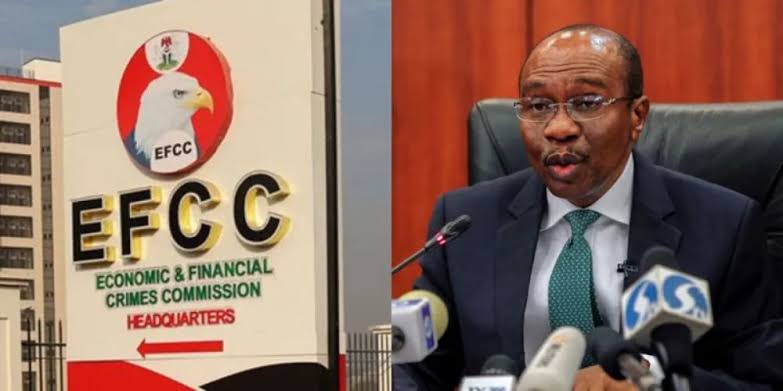
A prosecution witness in the trial of former Central Bank of Nigeria, CBN, Governor, Godwin Emefiele, on Thursday, November 26, 2026, told the Federal Capital Territory, FCT, High Court, Maitama, Abuja, that the naira notes eventually produced under the controversial redesign policy differed from the proposal approved by the President.
The witness, a Commissioner of Police, Eloho Okphebolo, who testified as Prosecution Witness 11, PW11, made the disclosure while being led in evidence by prosecution counsel, Rotimi Oyedepo, SAN, Director, Public Prosecutions of the Federation.
Emefiele is being prosecuted by the Economic and Financial Crimes Commission, EFCC, on a four-count charge bordering on alleged disobedience to lawful directives and unlawful acts that allegedly caused harm to members of the public in connection with the naira redesign policy.
Testifying before Justice Maryanne Anineh, the witness, who said he had served in the police for 31 years, disclosed that he encountered Emefiele during an investigation of the CBN by a special investigative team appointed by the President and headed by Jim Obazee.
He told the court: “I and some team of officers were seconded to a team appointed by the President to investigate the CBN. It was in the course of that assignment that I met the defendant.” he said.
Asked about the findings of his investigation in relation to the charge before the court, the witness said the team did not find evidence that the CBN Board had met and approved the colour change of the redesigned notes.
“We didn’t see any approval that the board met and approved the colour swap,” he said.
He further explained that the investigation revealed that Emefiele had written to the President seeking approval for the redesign of the currency and attached samples of the proposed designs.
According to him, although the President approved the proposal presented, the eventual production was different from what had been approved.
“In the investigation, we saw that Emefiele requested the President to approve the redesign of currency note and he attached a sample of the design that he wanted, which the President approved, but what was eventually done was not a redesign as was approved by the President but colour swap,” the witness said.
When shown a letter purportedly written by Emefiele to the President, the witness identified it and confirmed its authenticity.
“My evidence before this court is that what was approved by the President was not what is being done,” he said.
The witness also referred to Exhibit J1, a letter from the Chief Executive Officer of the Nigeria Security Printing and Minting Company, NSPMC, to the special investigator.
He told the court that after Emefiele forwarded the President’s approval to the NSPMC , the Company raised concerns about the proposed designs and advised against proceeding with the printing.
Referring to paragraphs three and four of the letter, the witness said the Chief Executive Officer stated that the proposed sketches had been carefully examined by him and his directors, who identified inconsistencies relating to the numbering, QR codes and watermarks.
According to the witness, NSPMC consequently advised Emefiele not to proceed with the printing.
While explaining the discrepancies, the witness referred to the currency sketches tendered before the court. He said the proposed N1,000 note in Exhibit J2 contained a QR code, whereas the version approved for production by the defendant did not.
He also told the court that the N500 note, referred to as Exhibit D2, and the N200 denomination did not have QR codes.
The witness further said that the investigation did not establish any approval by the President for the production of the currency notes without QR codes.
He added that the special investigation team had not been appointed at the time the notes were printed.
The witness also spoke about the difficulties Nigerians experienced in accessing cash during the implementation of the redesign policy. He said he was aware of the disruptions and efforts by the Nigeria Police to contain disturbances across the country, as well as legal actions instituted by some state governors to allow their residents continue using the old notes.
He said the policy caused hardship to many Nigerians, including himself.
On the financial transactions examined by the investigative team, the witness, when shown Exhibit K, identified it as an instruction from Emefiele directing the debit of N124.86 billion from the Consolidated Revenue Fund (CRF).
He also identified Exhibit AJ as a letter from the Federal Ministry of Finance to the special investigator and his team. According to him, the letter indicated that the Ministry had not granted approval for the transaction.
He maintained that there was no approval from the National Assembly for the debit of the CRF.
Under cross-examination by defence counsel, Olalekan Ojo, SAN, the witness told the court that he was deployed to the special investigation team on September 6, 2023.
Asked whether he had any direct interaction with Emefiele, he said he and the special investigator took the defendant’s statement while he was at Kuje Correctional Centre.
Justice Anineh adjourned the matter till December 15, 2026, and February 9, 15 and 16, 2027, for continuation of trial.