
Nigeria must prepare young people for power, says Speaker Abbas
Speaker of the House of Representatives, Rt. Hon. Abbas Tajudeen, has said that Nigeria must deliberately prepare young people for positions of leadership, insisting that they should no longer be...

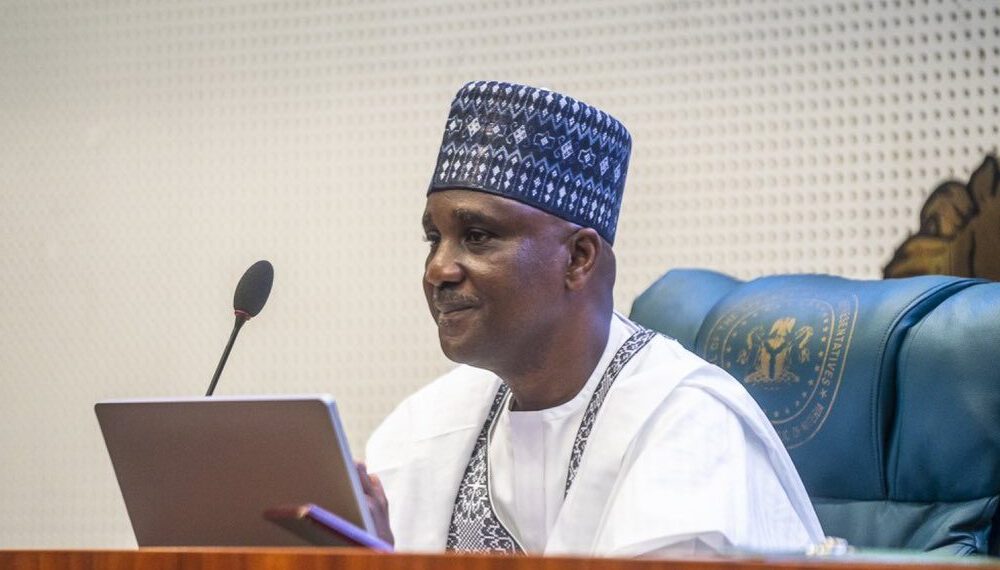
Speaker of the House of Representatives, Rt. Hon. Abbas Tajudeen, has said that Nigeria must deliberately prepare young people for positions of leadership, insisting that they should no longer be regarded merely as the leaders of tomorrow but as active participants in shaping the country’s future today.
Speaking on Tuesday at the launch of the LEAD Fellowship organised by the Gender Mobile Initiative at the National Assembly, Abbas said the country’s large youthful population must be equipped with the knowledge, ethical values, institutional exposure and leadership skills required to transform ambition into meaningful public service.
The Speaker, who was represented by the Chairman of the House Committee on Women Affairs and Social Development, Hon Kafilat Ogbara, said leadership goes beyond occupying political office, stressing that it is fundamentally about responsibility, accountability and respect for democratic institutions and the rule of law.
“It is high time we prepared young people for power. As the trustees of our tomorrow, they must understand how government works and how to use political office to change society for the better. Without this preparation, they risk squandering the opportunity to effect real, lasting good,” he said.
The Speaker commended the LEAD Fellowship for targeting students in tertiary institutions, describing the initiative as a strategic investment in Nigeria’s democratic future.
“The youths are no longer merely the leaders of tomorrow; their time has come. As voters, innovators, entrepreneurs and community leaders, they deserve the power to influence the decisions that shape their lives today,” Abbas added.
The Speaker reiterated the House of Representatives’ commitment to improving women’s political participation through the proposed constitutional amendment seeking the creation of special seats for women in the National Assembly and State Houses of Assembly.
He explained that the proposal was designed to address the long-standing under-representation of women without preventing them from contesting existing elective positions.
“Let me be absolutely clear: we are not attempting to lower the standard of leadership. We are attempting to remove the barriers that prevent capable women from even reaching the starting line,” he said.
To ensure the programme’s long-term impact, the Speaker proposed the establishment of a LEAD Alumni Policy Network to enable fellows to continue mentoring one another, conduct policy research and collaborate on initiatives that promote national development.
He also reaffirmed the House of Representatives’ commitment to partnering with the Gender Mobile Initiative to strengthen citizen engagement, promote inclusive governance and support reforms aimed at widening political participation.
Abbas stressed that constitutional reforms, particularly those relating to women’s representation, would require sustained advocacy and collaboration beyond the National Assembly, including engagement with State Houses of Assembly.
The Executive Lead of Gender Mobile Initiative, Omowumi Ogunrotimi, said the initiative was conceived to address the growing disconnect between student leadership and opportunities for meaningful participation in governance after graduation.
The initiative launched the Leadership for Equity, Advocacy and Development (LEAD) Fellowship, an 18-month leadership programme aimed at grooming 1,000 student leaders across 10 tertiary institutions for ethical leadership and public service.
She disclosed that the fellowship is being implemented in partnership with the Office of the Speaker of the House of Representatives, the National Institute for Legislative and Democratic Studies (NILDS), the Office of the Senior Special Assistant to the President on Student Engagement, with support from the Open Society Foundations.
According to her, Nigeria faces what she described as a “democratic formation deficit,” where early leadership experiences often reflect transactional politics, patronage, exclusion, abuse of influence and the normalisation of expediency over principle.
She also identified a “transition deficit,” explaining that many exceptional student leaders are left without structured pathways into governance, policymaking and democratic leadership after leaving school.
“As a result, civic talent is often disconnected from the very institutions that need it most,” she said.
The Executive Lead described the fellowship as more than a leadership programme, urging stakeholders to see it as a strategic investment in national security, human capital development and democratic renewal.
She said participants would undergo structured learning, engage with policymakers, academics and civil society leaders, and participate in policy conversations designed to bridge the gap between civic leadership and public institutions.
Ogunrotimi called on government institutions, development partners and civil society organisations to support the initiative, expressing confidence that it would produce a generation of ethical leaders capable of strengthening democratic governance and improving public institutions in Nigeria.
“Strong institutions require capable leaders. Leadership must therefore be identified, nurtured and developed,” he said.
According to the lawmaker, who represents Ekiti North I (Ikole/Oye) Federal Constituency, the fellowship aligns with his legislative philosophy of “Leaving No One Behind,” which seeks to promote inclusion, democratic participation, accountability and equitable access to opportunities for women, young people, persons with disabilities and underserved communities.
Rotimi said Parliament functions best when it works closely with civil society organisations, researchers, development partners and citizens, commending the Gender Mobile Initiative for its sustained contributions to legislative reforms.
Rotimi said that under Agenda Six of the Legislative Agenda, the House committed to developing a National Assembly Youth Engagement Strategy and has consistently engaged young people through structured policy dialogues.
He cited the Youth Town Hall held during the 2026 National Assembly Open Week, themed “2027 Elections: Your Voice, Your Vote, Your Truth,” as part of efforts to deepen youth participation in governance and strengthen electoral integrity.
“These efforts reflect a clear conviction: young people must not remain spectators in governance. Democracy works best when young people participate, organise, engage institutions, contest ideas and hold leaders accountable,” he said.
He urged participants not to confuse popularity with leadership, visibility with impact, office with service or access to power with preparation for leadership.
“Leadership demands character, competence, discipline, empathy and commitment to the common good,” he said.
Quoting former Ekiti State Governor, Kayode Fayemi, Rotimi reminded the fellows that, “Politics is not a sprint; it is a relay. One must learn how to carry the baton before aspiring to receive it.”
He charged the pioneer fellows to use the opportunity not only for personal advancement but also to create pathways for others, saying the quality of Nigeria’s future leadership would depend on the investments made in young people today.
The Director-General of the National Institute for Legislative and Democratic Studies (NILDS), Prof. Abubakar O. Sulaiman, said Nigeria’s democracy can only be strengthened through deliberate investment in ethical leadership long before individuals assume public office.
Sulaiman, who was represented Dr Shuaibu Danwanka, described the fellowship as a bold national investment in ethical leadership, democratic resilience and inclusive governance, saying it responds to the critical question of who will lead Nigeria in the future and how the country is preparing its young people for that responsibility.
“Today’s event represents far more than the unveiling of another fellowship programme. It is the launch of a bold national investment in ethical leadership, democratic resilience and inclusive governance,” he said.
According to him, the fellowship aligns with NILDS’ mandate of developing competent leaders, strengthening democratic institutions, advancing evidence-based policymaking and promoting inclusive governance for sustainable national development.
Sulaiman said Nigeria is at a defining stage in its democratic journey and requires leaders whose competence is matched by integrity, whose ambition is guided by service and whose authority is exercised with accountability.
“I have consistently maintained that strong democracies are built not merely by strong institutions but by leaders who possess the intellectual capacity, ethical discipline, emotional intelligence and patriotic commitment to strengthen those institutions,” he stated.
The NILDS Director-General said the institute has expanded beyond legislative research to become a national centre for democratic capacity development, policy innovation, leadership development, youth engagement, gender inclusion and institutional reform.
He noted that through partnerships with the National Assembly, universities, civil society organisations and international democratic institutions, NILDS has continued to strengthen legislative research, evidence-based policymaking and democratic governance.
According to him, leadership development should begin in classrooms, student unions and civic organisations where young people first learn to lead, build consensus and represent diverse interests.
He warned, however, that those same environments could also breed patronage, intolerance, exclusion, abuse of authority and weak accountability if ethical values were not deliberately nurtured.
“Unless we intentionally nurture ethical leadership, democratic values and a culture of service at this formative stage, we risk producing future leaders who replicate these negative practices in our public institutions rather than reforming them,” he said.
Sulaiman commended the LEAD Fellowship for adopting a comprehensive model that combines structured learning, peer engagement, policy training and institutional placements to prepare young people for leadership.
He added that the fellowship aligns with the Federal Government’s Renewed Hope Agenda, particularly in the areas of youth development, human capital development, inclusive governance and institutional reform.
Addressing the pioneer fellows, he urged them to uphold integrity, competence, innovation, collaboration and accountability, stressing that true leadership is measured not by titles but by positive impact and service to others.
He reaffirmed NILDS’ commitment to supporting the initiative through research, democratic education, legislative capacity development and strategic partnerships, expressing confidence that the fellowship would produce a new generation of ethical leaders capable of strengthening democratic governance and advancing Nigeria’s development.